



Protein Prenyltransferase
Protein Prenyltransferase
Protein Prenyltransferase is responsible for protein prenylation, a modification that regulates protein function by covalently attaching isoprenyl chains (such as farnesyl or geranyl) to target proteins. Protein Prenyltransferase increases the hydrophobicity and regulates the membrane localization. Protein Prenyltransferase promotes protein-protein interactions and affects cell signal transduction. Protein Prenyltransferase regulates plant growth and development, enhances the stress resistance of plants in response to environmental stresses such as drought and high temperature. Protein Prenyltransferase can be sorted into three main types, protein farnesyltransferase (PFT), protein geranylgeranyltransferase I (PGGT I) and rab geranylgeranyltransferase (PGGT II). PFT is responsible for covalently binding farnesyl to the CaaX sequence of the target protein (C represents cysteine, a is a hydrophobic amino acid, and X is the terminal amino acid). PGGT I modifies the same sequences as PFT, excrpt that X is leucine. PGGT II modifies the Rab protein family with the presence of Rab escort protein (REP). Protein Prenyltransferase dysfunction could lead to the prenylation of oncogenes Ras and Rho, exhibiting oncogenic activity. Protein Prenyltransferase dysfunction causes the prenylation of osteoclasts, resulting in osteoporosis[1][2].
Verweise:
- [1]. Dursina B, et al., Identification and specificity profiling of protein prenyltransferase inhibitors using new fluorescent phosphoisoprenoids. J Am Chem Soc. 2006 Mar 8;128(9):2822-35. [Content Brief]
- [2]. Tao W, et al. Cloning and characterization of protein prenyltransferase alpha subunit in rice[J]. Rice Science, 2021, 28(6): 557-566.
All Product Categories
-
Protein Prenyltransferase Verwandte Produkte (2)
Verwandte Produkte (2)

-
GGTI-286 TFA
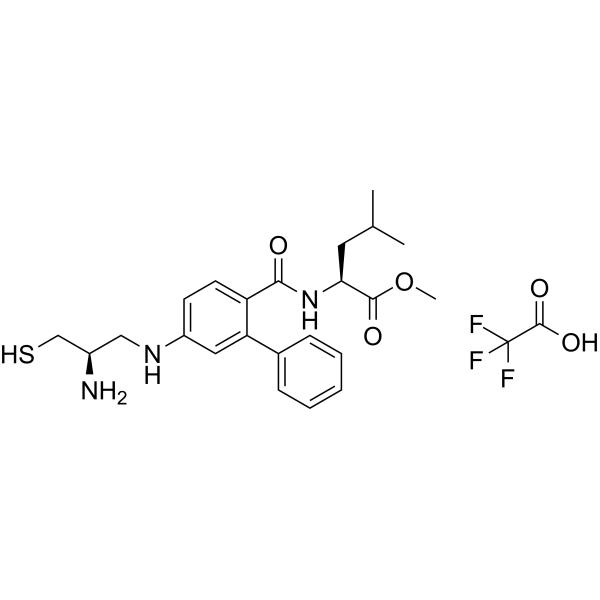 0 ImagesArt. -Nr.: HY-115489AGGTI-286 TFA, a potent and cell-permeable GGTase I inhibitor, is 25-fold more potent (IC50=2 μM) than the corresponding methyl ester of FTI-276 (HY-15873A). GGTI-286 TFA selectively inhibits geranylgeranylation of Rap1A over farnesylation of H-Ras in NIH3T3 cells (IC50s=2 and >30 μM, respectively). GGTI-286 TFA also potently inhibits oncogenic K-Ras4B stimulation with an IC50 of 1 μM.
-
GGTI-2147
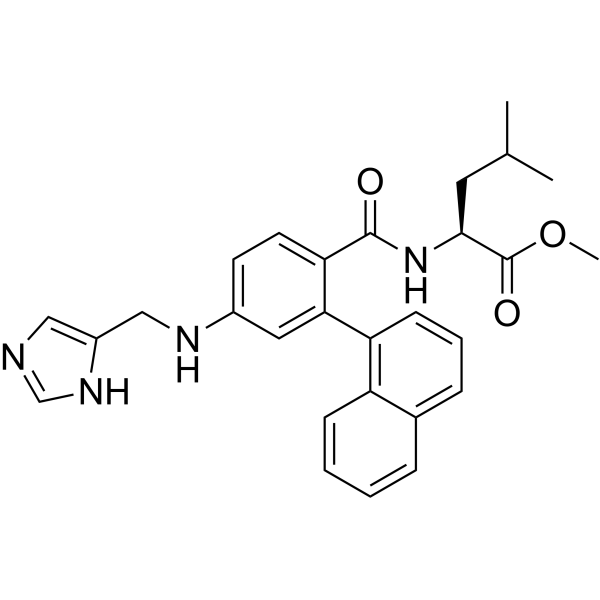 0 ImagesArt. -Nr.: HY-120229CAS. Nr.: 191102-87-1GGTI-2147 is a potent GGTase I inhibitor. GGTI-2147 blocks geranyl-geranylation of Rap1A and reduces the activity of Rac1 (one of substrates for GGTI) and ameliorates the OGD/R-induced neuronal apoptosis.GGTI-2147 can be used for neurodevelopmental disorders research, such as autism, depression, and schizophrenia.



